FOSS Hacker Principal Software Engineer at Red Hat Science Lover
The Illusion of Forced Virtue: Why True Morality Requires Freedom
Autored by Hervé Beraud on 7 January 2026
Are good deeds performed under duress truly moral? When an action is compelled, can we still consider it virtuous or ethical? This fundamental question challenges the very nature of our societal structure
The Illusion of Forced Virtue: Why True Morality Requires Freedom
Are good deeds performed under duress truly moral? When an action is compelled, can we still consider it virtuous or ethical? This fundamental question challenges the very nature of our societal structures and the meaning of personal responsibility. Let’s explore this through a short story.
A Tale of Two Neighbors: The Story of Pierre and Paul
Imagine two men, Pierre and Paul. They live in the same neighborhood, occasionally crossing paths, but remain largely strangers, indifferent to each other’s lives.
Pierre is navigating a difficult period. Beset by financial troubles, he struggles to make ends meet, finding it a constant battle to put food on the table for his family.
Paul, in contrast, enjoys a comfortable life. His finances are secure, bolstered by substantial savings. This stability isn’t the result of luck, but of his own frugal nature; for years, he has conscientiously saved a portion of his income every month.
One day at the local bakery, Paul overhears a tense conversation. Pierre is attempting to negotiate buying bread on credit, but the baker, facing his own economic pressures—from soaring electricity bills to the need to pay his employees—is forced to refuse. It’s a scene of quiet desperation, one the baker has witnessed with increasing frequency.
Paul is taken aback but continues with his purchase. After all, he owes Pierre nothing. Their eyes meet for a fleeting moment before they both head home. That evening, the memory of Pierre’s predicament lingers in Paul’s mind. An enterprising man, Paul is busy planning his next vacation to Asia, a well-deserved pleasure he looks forward to.
The Crossroads of Conscience
Days pass. Paul continues to see Pierre at the bakery, but only sporadically, on days when Pierre can afford a loaf. Then, one afternoon, Paul witnesses a moment of defeat. Pierre fumbles through his pockets, only to come up short on change. Resigned, he turns and leaves the shop empty-handed, his heart heavy with bitterness.
This time, something shifts in Paul. He decides to follow Pierre.
“Excuse me!” Paul calls out a few meters down the street.
Pierre turns, wary. “Yes? What is it?”
Paul explains that he saw what happened and that he isn’t indifferent to his struggle. Embarrassed, Pierre insists he isn’t looking for charity. But Paul clarifies his intention: he wants to offer help from his savings—a small loan, with no expectation of repayment.
Pierre remains cautious. “Why are you doing this? Nothing forces you to.”
Paul’s reply gets to the heart of the matter: “Exactly. Nothing forces me. I could have ignored your problems and gone on my way, but your situation moves me.”
In that moment, Pierre sees not pity, but a gesture of profound virtue. Sincerity radiates from Paul. Pierre accepts the offer.
The Broken Promise of the Social Contract
As they walk, Pierre vents his frustration. He recounts his months-long battle with social services, his file lost in a bureaucratic maze. “One time a form is missing, the next it’s filled out wrong, the next the supervisor is on sick leave,” he laments.
He delivers a final, cutting critique of the administration: “They tax us all year round boasting about ‘national solidarity’ and the ‘social contract,’ but when you actually need it, there’s no one there. Thank God there are still people like you.”
Pierre’s indignation extends to “pro-social” political movements that, in his view, champion forced solidarity while scorning individual charity, demanding that people simply “pay their taxes and shut up.”
The Unbreakable Link Between Freedom and Virtue
This story illustrates a powerful moral principle: an action is only virtuous if the person performing it has the choice not to do it. Without freedom, there is no virtue.
If I give you money because a man is pointing a gun at my head, I am not being generous; I am in survival mode. The act is born of coercion, not compassion.
By this logic, the welfare state cannot claim to be truly moral. The “solidarity” it creates is the fruit of coercion. A person whose resources are taken by force to be given to others is not being virtuous; they are being submissive. This masquerade of a social contract is a cornerstone of modern politics, yet it fundamentally misunderstands the nature of morality.
The Fallacy of Legislated Morality
This concept often stems from a cynical view of humanity—a belief that individuals are fundamentally flawed and require “guidance” from a higher authority. As the 19th-century economist Frédéric Bastiat observed, many political theorists seem to believe that humanity naturally tends toward evil, while they, the organizers, graciously incline toward good. The legislator is positioned as a shepherd, saving the flock from its own destructive instincts.
But this raises a critical question: If individuals are so fallible, how can we assume the intentions of the “organizers” are always pure? Are legislators not also part of the human race?
Morality as a Cooperation Algorithm
Modern science offers a different perspective, suggesting that morality is a sense, much like hearing or smell. Our moral judgments are often rapid and intuitive, driven by a deeply ingrained algorithm for cooperation. This algorithm processes data from our environment to guide our social interactions.
From this viewpoint, a legislator who imposes a moral framework isn’t a virtuous shepherd, but a manipulator of these moral triggers, aiming to appear attractive and necessary. True moral acts are, above all, acts of voluntary cooperation. They are costly to the individual showing self-sacrifice but are rewarded with a significant benefit: being chosen more often as a trusted partner. We are social animals, and the entire history of our species is a testament to voluntary collaboration.
Political Ideology and “Moral Aspartame”
Many dominant political ideologies, from Marxism to fascism, are rooted in utilitarianism. They seek to eliminate moral “arbitrariness” by providing a dogma that justifies any act, regardless of its results—which are often counter-intuitive, and sometimes monstrous.
Only the individual can be moral. By extension, only a school of thought that prioritizes individual liberty—liberalism or libertarianism—can be considered truly ethical. Any purely political morality is nothing but “moral aspartame.” It has the vague taste of virtue but none of its substance. Consumed in excess, it can become carcinogenic to society.
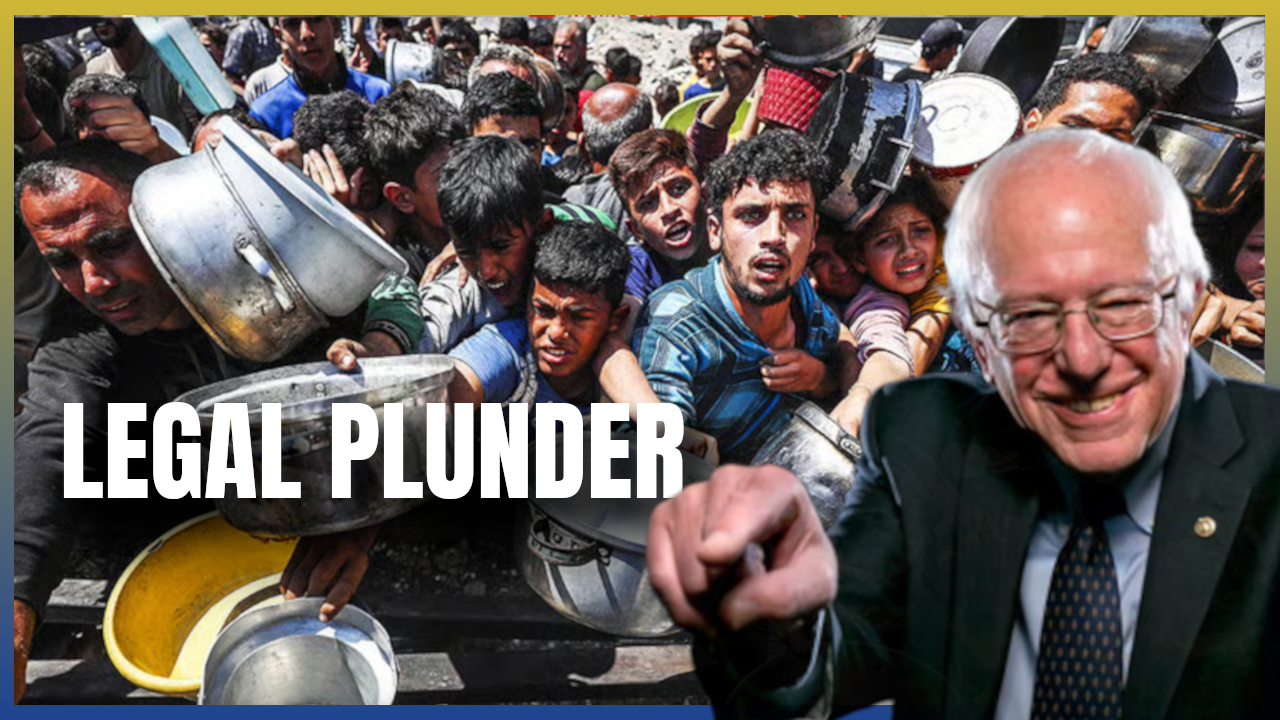
The conclusion is simple: it is your responsibility to be virtuous. No party or politician can absolve you of your individual actions. On the contrary, they will often seek to tax the little moral latitude you have left to drape themselves in it, trampling your freedom to orchestrate a system of legal plunder.
Your virtue is your guarantee of reliability. It is the master key to your future collaborations and your success. A reputation takes years to build but can be destroyed in an instant. Your personal morality is your safeguard. By consciously incorporating a moral dimension into your free choices, you will rise above the fray.
Build Your Freedom, Secure Your Virtue
My goal is to provide you with the keys to understanding these mechanisms, becoming autonomous, and protecting your individual liberty. An individual is only truly free if their income does not depend on the goodwill of others. Building this independence is the foundation upon which you can exercise true virtue.
Here are some resources to help you on that path:
In-Depth Content: For tutorials and detailed analyses on achieving autonomy, you can support my work on Patreon. It is the best way to gain value while helping me continue creating free content.
Essential Reading: To understand the mechanisms of power and freedom, I highly recommend obtaining a copy of Frédéric Bastiat’s seminal work, The Law.
Financial Tools: To build your financial base, consider platforms like Trade Republic for growing your capital over the long term, or GoMining to begin accumulating Bitcoin.
If this article resonated with you, please share it to spark conversation. You can follow my work and connect with me on YouTube, Twitter, and LinkedIn.